Sestrin-2 also known as Hi95 is a protein that in humans is encoded by the SESN2 gene.[4][5][6]
| SESN2 |
|---|
|
| Available structures |
|---|
| PDB | Ortholog search: PDBe RCSB |
|---|
| List of PDB id codes |
|---|
5DJ4, 5CUF |
|
|
| Identifiers |
|---|
| Aliases | SESN2, HI95, SES2, SEST2, sestrin 2 |
|---|
| External IDs | OMIM: 607767 MGI: 2651874 HomoloGene: 12873 GeneCards: SESN2 |
|---|
| Gene location (Human) |
|---|
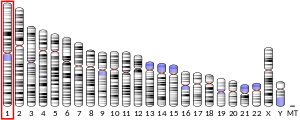 | | Chr. | Chromosome 1 (human)[1] |
|---|
| | Band | 1p35.3 | Start | 28,259,518 bp[1] |
|---|
| End | 28,282,491 bp[1] |
|---|
|
| RNA expression pattern |
|---|
 | | More reference expression data |
|
| Gene ontology |
|---|
| Molecular function | • GO:0001948 protein binding
• oxidoreductase activity, acting on peroxide as acceptor
• leucine binding
• sulfiredoxin activity
• oxidoreductase activity
• GDP-dissociation inhibitor activity
|
|---|
| Cellular component | • cell nucleus
• mitochondrion
• cytosol
• cytoplasm
• GATOR2 complex
• nucleotide-activated protein kinase complex
• ATG1/ULK1 kinase complex
• TORC2 complex
|
|---|
| Biological process | • mitochondrial DNA metabolic process
• mitochondrion organization
• protein kinase B signaling
• regulation of cAMP-dependent protein kinase activity
• response to insulin
• response to glucose
• glucose homeostasis
• glucose import
• regulation of response to reactive oxygen species
• triglyceride homeostasis
• fatty acid beta-oxidation
• negative regulation of TORC1 signaling
• positive regulation of transcription from RNA polymerase II promoter in response to oxidative stress
• reactive oxygen species metabolic process
• positive regulation of macroautophagy
• cellular response to amino acid stimulus
• regulation of protein phosphorylation
• DNA damage response, signal transduction by p53 class mediator
• cellular response to leucine
• positive regulation of protein localization to nucleus
• cellular oxidant detoxification
• oxidation-reduction process
• negative regulation of cell growth
• cellular response to oxidative stress
• negative regulation of translation in response to endoplasmic reticulum stress
• positive regulation of lipophagy
• cellular response to amino acid starvation
• cellular response to glucose starvation
• cellular response to leucine starvation
• regulation of gluconeogenesis
|
|---|
| Sources:Amigo / QuickGO |
|
| Orthologs |
|---|
| Species | Human | Mouse |
|---|
| Entrez | | |
|---|
| Ensembl | |
|---|
ENSG00000130766
ENSG00000285069 |
| |
|---|
| UniProt | | |
|---|
| RefSeq (mRNA) | | |
|---|
| RefSeq (protein) | | |
|---|
| Location (UCSC) | Chr 1: 28.26 – 28.28 Mb | n/a |
|---|
| PubMed search | [2] | [3] |
|---|
| Wikidata |
| View/Edit Human | View/Edit Mouse |
|
FunctionEditThis gene encodes a member of the sestrin family of PA26-related proteins. The encoded protein may function in the regulation of cell growth and survival. This protein may be involved in cellular response to different stress conditions.[6][7] The Sestrins constitute a family of evolutionarily-conserved stress-inducible proteins that suppress oxidative stress and regulate adenosine monophosphate-dependent protein kinase (AMPK)-mammalian target of rapamycin (mTOR) signaling. By virtue of these activities, the Sestrins serve as important regulators of metabolic homeostasis. Accordingly, inactivation of Sestrin genes in invertebrates resulted in diverse metabolic pathologies, including oxidative damage, fat accumulation, mitochondrial dysfunction and muscle degeneration that resemble accelerated tissue aging.[6][8]
LigandsEditThe NMDA receptor antagonist ketamine has been found to activate the mammalian target of rapamycin complex 1 (mTORC1) pathway in the medial prefrontal cortex (mPFC) of the brain as an essential downstream mechanism in the mediation of its rapid-acting antidepressant effects.[9] NV-5138 is a ligand and modulator of sestrin2, a leucine amino acid sensor and upstream regulatory pathway of mTORC1, and is under development for the treatment of depression.[9] The drug has been found to directly and selectively activate the mTORC1 pathway, including in the mPFC, and to produce rapid-acting antidepressant effects similar to those of ketamine.[9]


