Reticulon 4, also known as Neurite outgrowth inhibitor or Nogo, is a protein that in humans is encoded by the RTN4 gene[5][6][7] that has been identified as an inhibitor of neurite outgrowth specific to the central nervous system. During neural development Nogo is expressed mainly by neurons and provides an inhibitory signal for the migration and sprouting of CNS endothelial (tip) cells, thereby restricting blood vessel density.
| RTN4 |
|---|
 |
| Available structures |
|---|
| PDB | Ortholog search: PDBe RCSB |
|---|
| List of PDB id codes |
|---|
2G31, 2JV5 |
|
|
| Identifiers |
|---|
| Aliases | RTN4, ASY, NI220/250, NOGO, NOGO-A, NOGOC, NSP, NSP-CL, Nbla00271, Nbla10545, Nogo-B, Nogo-C, RTN-X, RTN4-A, RTN4-B1, RTN4-B2, RTN4-C, Reticulon 4 |
|---|
| External IDs | OMIM: 604475 MGI: 1915835 HomoloGene: 10743 GeneCards: RTN4 |
|---|
| Gene location (Human) |
|---|
 | | Chr. | Chromosome 2 (human)[1] |
|---|
| | Band | 2p16.1 | Start | 54,972,187 bp[1] |
|---|
| End | 55,112,621 bp[1] |
|---|
|
| Gene location (Mouse) |
|---|
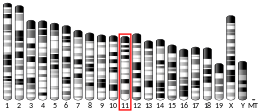 | | Chr. | Chromosome 11 (mouse)[2] |
|---|
| | Band | 11|11 A3.3 | Start | 29,692,947 bp[2] |
|---|
| End | 29,744,331 bp[2] |
|---|
|
| RNA expression pattern |
|---|
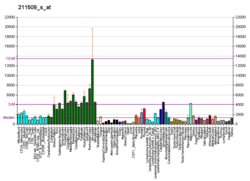

 | | More reference expression data |
|
| Gene ontology |
|---|
| Molecular function | • GO:0001948 protein binding
• RNA binding
• cadherin binding
• ubiquitin protein ligase binding
|
|---|
| Cellular component | • integral component of membrane
• cell projection
• nuclear envelope
• membrane
• integral component of endoplasmic reticulum membrane
• intracellular
• endoplasmic reticulum
• endoplasmic reticulum membrane
• cell membrane
• extracellular exosome
• GO:0097483, GO:0097481 postsynaptic density
• endoplasmic reticulum tubular network
• neuronal cell body
• endoplasmic reticulum tubular network membrane
• cell junction
|
|---|
| Biological process | • nuclear pore complex assembly
• regulation of apoptotic process
• cerebral cortex radial glia guided migration
• regulation of branching morphogenesis of a nerve
• cardiac epithelial to mesenchymal transition
• negative regulation of axon extension
• apoptotic process
• negative regulation of axonogenesis
• nervous system development
• regulation of nervous system development
• endoplasmic reticulum tubular network formation
• endoplasmic reticulum tubular network organization
• regulation of cell migration
• negative regulation of cell growth
• axonal fasciculation
• positive regulation of epithelial cell migration
• positive regulation of mammary gland epithelial cell proliferation
• protein stabilization
• positive regulation of protein kinase B signaling
• positive regulation of protein localization to endoplasmic reticulum
• positive regulation of ERBB3 signaling pathway
• endoplasmic reticulum tubular network membrane organization
• blastocyst formation
• positive regulation of toll-like receptor 9 signaling pathway
• protein localization to lysosome
• cellular sphingolipid homeostasis
|
|---|
| Sources:Amigo / QuickGO |
|
| Orthologs |
|---|
| Species | Human | Mouse |
|---|
| Entrez | | |
|---|
| Ensembl | | |
|---|
| UniProt | | |
|---|
| RefSeq (mRNA) | NM_007008
NM_020532
NM_153828
NM_207520
NM_207521
|
|---|
NM_001321859
NM_001321860
NM_001321861
NM_001321862
NM_001321863
NM_001321904 |
| |
|---|
NM_024226
NM_194051
NM_194052
NM_194053
NM_194054 |
|
|---|
| RefSeq (protein) | NP_001308788
NP_001308789
NP_001308790
NP_001308791
NP_001308792
|
|---|
NP_001308833
NP_008939
NP_065393
NP_722550
NP_997403
NP_997404 |
| |
|---|
NP_077188
NP_918940
NP_918941
NP_918942
NP_918943 |
|
|---|
| Location (UCSC) | Chr 2: 54.97 – 55.11 Mb | Chr 11: 29.69 – 29.74 Mb |
|---|
| PubMed search | [3] | [4] |
|---|
| Wikidata |
| View/Edit Human | View/Edit Mouse |
|
This gene belongs to the family of reticulon-encoding genes. Reticulons are associated with the endoplasmic reticulum, and are involved in neuroendocrine secretion or in membrane trafficking in neuroendocrine cells. The product of this gene is a potent neurite outgrowth inhibitor that may also help block the regeneration of the central nervous system in higher vertebrates. Alternatively spliced transcript variants derived both from differential splicing and differential promoter usage and encoding different isoforms have been identified.[7] There are three isoforms: Nogo A, B and C. Nogo-A has two known inhibitory domains including amino-Nogo, at the N-terminus and Nogo-66, which makes up the molecules extracellular loop. Both amino-Nogo and Nogo-66 are involved in inhibitory responses, where amino-Nogo is a strong inhibitor of neurite outgrowth, and Nogo-66 is involved in growth cone destruction.[8]
Research suggests that blocking Nogo-A during neuronal damage (from diseases such as multiple sclerosis) will help to protect or restore the damaged neurons.[8][9] The investigation into the mechanisms of this protein presents a great potential for the treatment of auto-immune mediated demyelinating diseases and spinal cord injury regeneration. It has also been found to be a key player in the process whereby physical exercise enhances learning and memory processes in the brain.[10] Nogo-A has also been shown to negatively regulate vascular growth and repair following ischemic stroke. Genetic deletion and antibody-mediated blockage of Nogo-A led to enhanced re-vascularization and functional recovery in an experimental mouse model of stroke.[11][12][13] Moreover, vascular leakage, a major complication following stroke, was reduced following anti-Nogo-A antidbody treatment.[14]
InteractionsEditReticulon 4 has been shown to interact with WWP1,[15] BCL2-like 1[16] and Bcl-2.[16]


