Rac1, also known as Ras-related C3 botulinum toxin substrate 1, is a protein found in human cells. It is encoded by the RAC1 gene.[5][6] This gene can produce a variety of alternatively spliced versions of the Rac1 protein, which appear to carry out different functions.[7]
| RAC1 |
|---|
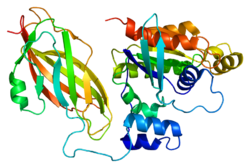 |
| Available structures |
|---|
| PDB | Ortholog search: PDBe RCSB |
|---|
| List of PDB id codes |
|---|
1E96, 1FOE, 1G4U, 1HE1, 1HH4, 1I4D, 1I4L, 1I4T, 1MH1, 1RYF, 1RYH, 2FJU, 2H7V, 2NZ8, 2P2L, 2RMK, 2VRW, 2WKP, 2WKQ, 2WKR, 2YIN, 3B13, 3BJI, 3RYT, 3SBD, 3SBE, 3SU8, 3SUA, 3TH5, 4GZL, 4GZM, 4YON, 5FI0 |
|
|
| Identifiers |
|---|
| Aliases | RAC1, MIG5, Rac-1, TC-25, p21-Rac1, ras-related C3 botulinum toxin substrate 1 (rho family, small GTP binding protein Rac1), Rac family small GTPase 1, MRD48 |
|---|
| External IDs | OMIM: 602048 MGI: 97845 HomoloGene: 69035 GeneCards: RAC1 |
|---|
| Gene location (Human) |
|---|
 | | Chr. | Chromosome 7 (human)[1] |
|---|
| | Band | 7p22.1 | Start | 6,374,527 bp[1] |
|---|
| End | 6,403,967 bp[1] |
|---|
|
| Gene location (Mouse) |
|---|
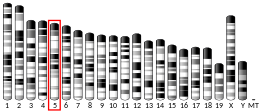 | | Chr. | Chromosome 5 (mouse)[2] |
|---|
| | Band | 5 G2|5 82.22 cM | Start | 143,503,634 bp[2] |
|---|
| End | 143,528,036 bp[2] |
|---|
|
| RNA expression pattern |
|---|
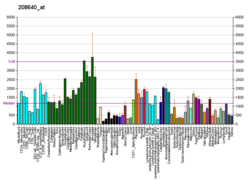
 | | More reference expression data |
|
| Gene ontology |
|---|
| Molecular function | • histone deacetylase binding
• Rho GDP-dissociation inhibitor binding
• GTP-dependent protein binding
• GTPase activity
• enzyme binding
• GO:0001948 protein binding
• thioesterase binding
• protein kinase binding
• nucleotide binding
• GTP binding
• Rab GTPase binding
• protein serine/threonine kinase activity
• GO:0032403 macromolecular complex binding
• phosphatidylinositol-4,5-bisphosphate 3-kinase activity
• ATPase binding
|
|---|
| Cellular component | • cytoplasm
• cytosol
• membrane
• focal adhesion
• melanosome
• ruffle membrane
• trans-Golgi network
• cell nucleus
• cell projection
• extrinsic component of plasma membrane
• extracellular exosome
• lamellipodium
• early endosome membrane
• cell membrane
• actin filament
• cytoplasmic ribonucleoprotein granule
• endoplasmic reticulum membrane
• Golgi membrane
• phagocytic cup
• cytoplasmic vesicle
• extracellular matrix
• secretory granule membrane
• dendritic spine
• recycling endosome membrane
• postsynapse
• glutamatergic synapse
• ficolin-1-rich granule membrane
|
|---|
| Biological process | • positive regulation of Rho protein signal transduction
• regulation of respiratory burst
• movement of cell or subcellular component
• non-canonical Wnt signaling pathway
• positive regulation of protein phosphorylation
• positive regulation of actin filament polymerization
• regulation of neuron maturation
• negative regulation of receptor-mediated endocytosis
• platelet activation
• Fc-epsilon receptor signaling pathway
• cellular response to mechanical stimulus
• phagocytosis, engulfment
• vascular endothelial growth factor receptor signaling pathway
• substrate adhesion-dependent cell spreading
• cellular proliferation
• ruffle assembly
• lamellipodium assembly
• dopaminergic neuron differentiation
• cell-cell junction organization
• Fc-gamma receptor signaling pathway involved in phagocytosis
• ruffle organization
• actin filament organization
• cell motility
• anatomical structure morphogenesis
• bone resorption
• response to wounding
• protein localization to plasma membrane
• inflammatory response
• regulation of small GTPase mediated signal transduction
• positive regulation of cell-substrate adhesion
• G-protein coupled receptor signaling pathway
• neuron projection morphogenesis
• epithelial cell morphogenesis
• dendrite morphogenesis
• regulation of hydrogen peroxide metabolic process
• engulfment of apoptotic cell
• dendrite development
• auditory receptor cell morphogenesis
• hyperosmotic response
• cerebral cortex GABAergic interneuron development
• chemotaxis
• positive regulation of DNA replication
• actin filament polymerization
• cell adhesion
• negative regulation of interleukin-23 production
• homeostasis of number of cells within a tissue
• cell-matrix adhesion
• localization within membrane
• actin cytoskeleton organization
• regulation of cell size
• anatomical structure arrangement
• GO:0007243 intracellular signal transduction
• regulation of cell migration
• endocytosis
• ephrin receptor signaling pathway
• T cell costimulation
• blood coagulation
• regulation of defense response to virus by virus
• synaptic transmission, GABAergic
• mast cell chemotaxis
• positive regulation of phosphatidylinositol 3-kinase activity
• positive regulation of substrate adhesion-dependent cell spreading
• embryonic olfactory bulb interneuron precursor migration
• cytoskeleton organization
• cochlea morphogenesis
• positive regulation of neutrophil chemotaxis
• positive regulation of apoptotic process
• regulation of cell morphogenesis
• positive regulation of focal adhesion assembly
• regulation of fibroblast migration
• positive regulation of lamellipodium assembly
• cerebral cortex radially oriented cell migration
• cell migration
• semaphorin-plexin signaling pathway
• positive regulation of stress fiber assembly
• axon guidance
• small GTPase mediated signal transduction
• GO:0032320, GO:0032321, GO:0032855, GO:0043089, GO:0032854 positive regulation of GTPase activity
• Wnt signaling pathway, planar cell polarity pathway
• midbrain dopaminergic neuron differentiation
• neuron migration
• protein phosphorylation
• Rho protein signal transduction
• regulation of lamellipodium assembly
• Rac protein signal transduction
• cell projection assembly
• positive regulation of microtubule polymerization
• neutrophil degranulation
• regulation of nitric oxide biosynthetic process
• phosphatidylinositol phosphorylation
• hepatocyte growth factor receptor signaling pathway
• regulation of stress fiber assembly
• positive regulation of protein kinase B signaling
• motor neuron axon guidance
• regulation of neutrophil migration
• positive regulation of insulin secretion involved in cellular response to glucose stimulus
|
|---|
| Sources:Amigo / QuickGO |
|
| Orthologs |
|---|
| Species | Human | Mouse |
|---|
| Entrez | | |
|---|
| Ensembl | | |
|---|
| UniProt | | |
|---|
| RefSeq (mRNA) | |
|---|
NM_198829
NM_006908
NM_018890 |
| |
|---|
| RefSeq (protein) | | |
|---|
| Location (UCSC) | Chr 7: 6.37 – 6.4 Mb | Chr 5: 143.5 – 143.53 Mb |
|---|
| PubMed search | [3] | [4] |
|---|
| Wikidata |
| View/Edit Human | View/Edit Mouse |
|
FunctionEditRac1 is a small (~21 kDa) signaling G protein (more specifically a GTPase), and is a member of the Rac subfamily of the family Rho family of GTPases. Members of this superfamily appear to regulate a diverse array of cellular events, including the control of GLUT4[8][9] translocation to glucose uptake, cell growth, cytoskeletal reorganization, antimicrobial cytotoxicity,[10] and the activation of protein kinases.[11]
Rac1 is a pleiotropic regulator of many cellular processes, including the cell cycle, cell-cell adhesion, motility (through the actin network), and of epithelial differentiation (proposed to be necessary for maintaining epidermal stem cells).
Role in cancerEditAlong with other subfamily of Rac and Rho proteins, they exert an important regulatory role specifically in cell motility and cell growth. Rac1 has ubiquitous tissue expression, and drives cell motility by formation of lamellipodia.[12] In order for cancer cells to grow and invade local and distant tissues, deregulation of cell motility is one of the hallmark events in cancer cell invasion and metastasis.[13] Overexpression of a constitutively active Rac1 V12 in mice caused a tumor that's phenotypically indistinguishable from human Kaposi's sarcoma.[14] Activating or gain-of-function mutations of Rac1 are shown to play active roles in promoting mesenchymal-type of cell movement assisted by NEDD9 and DOCK3 protein complex.[15] Such abnormal cell motility may result in epithelial mesenchymal transition (EMT) – a driving mechanism for tumor metastasis as well as drug-resistant tumor relapse.[16][17]
Role in glucose transportEditRac1 is expressed in significant amounts in insulin sensitive tissues, such as adipose tissue and skeletal muscle. Here Rac1 regulated the translocation of glucose transporting GLUT4 vesicles from intracellular compartments to the plasma membrane.[9][18][19] In response to insulin, this allows for blood glucose to enter the cell to lower blood glucose. In conditions of obesity and type 2 diabetes, Rac1 signaling in skeletal muscle is dysfunctional, suggesting that Rac1 contributes to the progression of the disease. Rac1 protein is also necessary for glucose uptake in skeletal muscle activated by exercise[8][20] and muscle stretching[21]
Clinical significanceEditActivating mutations in Rac1 have been recently discovered in large-scale genomic studies involving melanoma [22][23][24] and non-small cell lung cancer.[25] As a result, Rac1 is considered a therapeutic target for many of these diseases.[26]
A few recent studies have also exploited targeted therapy to suppress tumor growth by pharmacological inhibition of Rac1 activity in metastatic melanoma and liver cancer as well as in human breast cancer.[27][28][29] For example, Rac1-dependent pathway inhibition resulted in the reversal of tumor cell phenotypes, suggesting Rac1 as a predictive marker and therapeutic target for trastuzumab-resistant breast cancer.[28] However, given Rac1's role in glucose transport, drugs that inhibits Rac1 could potentially be harmful to glucose homeostasis.
Dominant negative or constitutively active germline RAC1 mutations cause diverse phenotypes that have been grouped together as Mental Retardation Type 48.[30] Most mutations cause microcephaly while some specific changes appear to result in macrocephaly.


