Neurochondrin (also known as its murine homologue, Norbin) is a protein that in humans is encoded by the NCDN gene.[5][6]
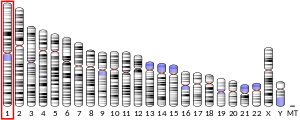



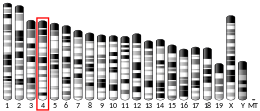



This gene encodes a leucine-rich cytoplasmic protein, which is highly similar to a mouse protein norbin that negatively regulates Ca/calmodulin-dependent protein kinase II phosphorylation and may be essential for spatial learning processes. Several alternatively spliced transcript variants of this gene have been described.[6]
Norbin can modulate signaling activity and expression of metabotropic glutamate receptor 5; modulating mice with targeted deletion of NCDN in the brain have phenotypic traits usually found in the rodent models of schizophrenia, including disruptions in prepulse inhibition.[7] Furthermore, norbin protein expression is altered in the schizophrenia brain.[8]
| This article uses material from the Wikipedia article Metasyntactic variable, which is released under the Creative Commons Attribution-ShareAlike 3.0 Unported License. |