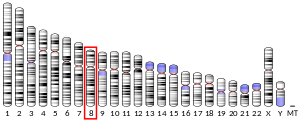
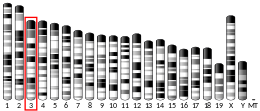
Interleukin 7 (IL-7) is a protein[5] that in humans is encoded by the IL7 gene.[6][7][8]



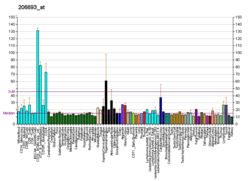
IL-7 is a hematopoietic growth factor secreted by stromal cells in the bone marrow and thymus. It is also produced by keratinocytes,[9] dendritic cells,[10] hepatocytes,[11] neurons, and epithelial cells,[12] but is not produced by normal lymphocytes.[13] A study also demonstrate how the autocrine production of the IL-7 cytokine mediated by T-cell acute lymphoblastic leukemia (T-ALL) can be involved in the oncogenic development of T-ALL and offer novel insights into T-ALL spreading. [14]
Structure
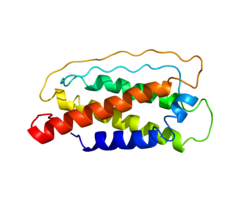
The three-dimensional structure of IL-7 in complex with the ectodomain of IL-7 receptor has been determined using X-ray diffraction.[15]
Function
Lymphocyte maturation
IL-7 stimulates the differentiation of multipotent (pluripotent) hematopoietic stem cells into lymphoid progenitor cells (as opposed to myeloid progenitor cells where differentiation is stimulated by IL-3).[citation needed] It also stimulates proliferation of all cells in the lymphoid lineage (B cells, T cells and NK cells).[citation needed] It is important for proliferation during certain stages of B-cell maturation, T and NK cell survival, development and homeostasis.[citation needed]
IL-7 is a cytokine important for B and T cell development. This cytokine and the hepatocyte growth factor (HGF) form a heterodimer that functions as a pre-pro-B cell growth-stimulating factor. This cytokine is found to be a cofactor for V(D)J rearrangement of the T cell receptor beta (TCRß) during early T cell development.[16] This cytokine can be produced locally by intestinal epithelial and epithelial goblet cells, and may serve as a regulatory factor for intestinal mucosal lymphocytes.[citation needed] Knockout studies in mice suggested that this cytokine plays an essential role in lymphoid cell survival.[17]
IL-7 signaling
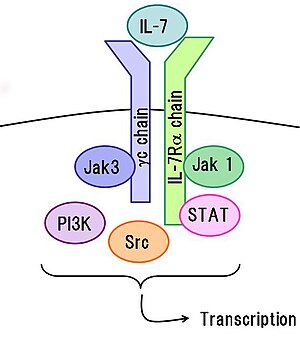
IL-7 binds to the IL-7 receptor, a heterodimer consisting of Interleukin-7 receptor alpha and common gamma chain receptor.[18] Binding results in a cascade of signals important for T-cell development within the thymus and survival within the periphery. Knockout mice which genetically lack IL-7 receptor exhibit thymic atrophy, arrest of T-cell development at the double positive stage, and severe lymphopenia. Administration of IL-7 to mice results in an increase in recent thymic emigrants, increases in B and T cells, and increased recovery of T cells after cyclophosphamide administration or after bone marrow transplantation.
Disease
Cancer
IL-7 promotes hematological malignancies (acute lymphoblastic leukemia, T cell lymphoma).[19]
Viral Infections
Elevated levels of IL-7 have also been detected in the plasma of HIV-infected patients.[20]
Clinical application
IL-7 as an immunotherapy agent has been examined in many pre-clinical animal studies and more recently in human clinical trials for various malignancies and during HIV infection.[13][21]
Cancer
Recombinant IL-7 has been safely administered to patients in several phase I and II clinical trials. A human study of IL-7 in patients with cancer demonstrated that administration of this cytokine can transiently disrupt the homeostasis of both CD8+ and CD4+ T cells with a commensurate decrease in the percentage of CD4+CD25+Foxp3+ T regulatory cells.[22] No objective cancer regression was observed, however a dose limiting toxicity (DLT) was not reached in this study due to the development of neutralizing antibodies against the recombinant cytokine.
HIV infection
Associated with antiretroviral therapy, IL-7 administration decreased local and systemic inflammations in patients that had incomplete T-cell reconstitution. These results suggest that IL-7 therapy can possibly improve the quality of life of those patients.[23]
Transplantation
IL-7 could also be beneficial in improving immune recovery after allogenic stem cell transplant.[24]
| This article uses material from the Wikipedia article Metasyntactic variable, which is released under the Creative Commons Attribution-ShareAlike 3.0 Unported License. |