Interleukin 5 (IL5) is an interleukin produced by type-2 T helper cells and mast cells.




Function
Through binding to the interleukin-5 receptor, interleukin 5 stimulates B cell growth and increases immunoglobulin secretion - primarily IgA. It is also a key mediator in eosinophil activation.
Structure
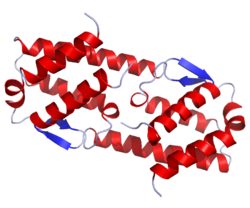
IL-5 is a 115-amino acid (in human, 133 in the mouse) -long TH2 cytokine that is part of the hematopoietic family. Unlike other members of this cytokine family (namely interleukin 3 and GM-CSF), this glycoprotein in its active form is a homodimer.[5]
Tissue expression
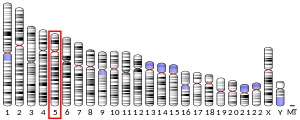
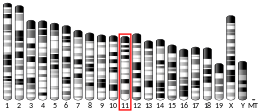
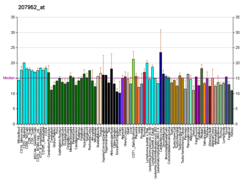
The IL-5 gene is located on chromosome 11 in the mouse, and chromosome 5 in humans, in close proximity to the genes encoding IL-3, IL-4, and granulocyte-macrophage colony-stimulating factor (GM-CSF),[6][7] which are often co-expressed in TH2 cells. Interleukin-5 is also expressed by eosinophils[8] and has been observed in the mast cells of asthmatic airways by immunohistochemistry.[9] IL-5 expression is regulated by several transcription factors including GATA3.[10]
Clinical significance
Interleukin-5 has long been associated with the cause of several allergic diseases including allergic rhinitis and asthma, wherein a large increase in the number of circulating, airway tissue, and induced sputum eosinophils have been observed.[11] Given the high concordance of eosinophils and, in particular, allergic asthma pathology, it has been widely speculated that eosinophils have an important role in the pathology of this disease.[12]
Drugs that target IL-5 are mepolizumab and reslizumab.
Effect on eosinophils
Eosinophils are terminally differentiated granulocytes found in most mammals. The principal role of these cells, in a healthy host, is the elimination of antibody bound parasites through the release of cytotoxic granule proteins.[13] Given that eosinophils are the primary IL-5Rα-expressing cells, it is not surprising that this cell type responds to IL-5. In fact, IL-5 was originally discovered as an eosinophil colony-stimulating factor,[14] is a major regulator of eosinophil accumulation in tissues, and can modulate eosinophil behavior at every stage from maturation to survival. Mepolizumab is a monoclonal antibody against IL-5 which can reduce excessive eosinophilia.
In Hodgkin lymphoma, for instance, the typically-observed eosinophilia is thought to be attributable to an increased production of IL-5.[15]
Interactions
Interleukin 5 has been shown to interact with Interleukin 5 receptor alpha subunit.[16][17][18]
| This article uses material from the Wikipedia article Metasyntactic variable, which is released under the Creative Commons Attribution-ShareAlike 3.0 Unported License. |