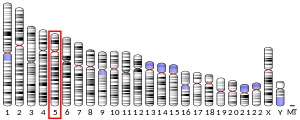
Interleukin 3 (IL-3) is a protein that in humans is encoded by the IL3 gene localised on chromosome 5q31.1.[3][4]



Synonyms: colony-stimulating factor; mast cell growth factor, MULTI-CSF, MCGF; MGC79398, MGC79399.
The protein contains 152 amino acids and its molecular weight is 17 kDa.
IL-3 is produced as a monomer by activated T cells, monocytes/macrophages and stroma cells.[5]
Importance
The major function of IL-3 cytokine is to regulate blood-cell production.[6] It induces proliferation and differentiation of early pluripotent stem cells and committed progenitors.[7]
Function
Interleukin 3 is an interleukin, a type of biological signal (cytokine) that can improve the body's natural response to disease as part of the immune system. It acts by binding to the interleukin-3 receptor.
Interleukin 3 stimulates the differentiation of multipotent hematopoietic stem cells into myeloid progenitor cells or, with the addition of IL-7, into lymphoid progenitor cells. In addition, IL-3 stimulates proliferation of all cells in the myeloid lineage (granulocytes, monocytes, and dendritic cells), in conjunction with other cytokines, e.g., Erythropoietin (EPO), Granulocyte macrophage colony-stimulating factor (GM-CSF), and IL-6. It is secreted by basophils and activated T cells to support growth and differentiation of T cells from the bone marrow in an immune response. Activated T cells can either induce their own proliferation and differentiation (autocrine signalling), or that of other T cells (paracrine signalling) – both involve IL-2 binding to the IL-2 receptor on T cells (upregulated upon cell activation, under the induction of macrophage-secreted IL-1). The human IL-3 gene encodes a protein 152 amino acids long, and the naturally occurring IL-3 is glycosylated. The human IL-3 gene is located on chromosome 5, only 9 kilobases from the GM-CSF gene, and its function is quite similar to GM-CSF.
Receptor
IL-3 is a T cell-derived, pluripotent and hematopoietic factor required for survival and proliferation of hematopoietic progenitor cells. The signal transmission is ensured by high affinity between cell surface interleukin-3 receptor and IL-3.[8] This high affinity receptor contains α and β subunits. IL-3 shares the β subunit with IL-5 and granulocyte-macrophage colony-stimulating factor (GM-CSF).[9] This β subunit sharing explains the biological functional similarities of different hematopoietic growth factors.[10]
IL-3/Receptor complex induces JAK2/STAT5 cell signalisation pathway. It can stimulate transcription factor c‑myc (activation of gene expression) and Ras pathway (suppression of apoptosis).[5]
Discovery
Interleukin 3 was originally discovered in mice. He found a T cell derived factor that induced the synthesis of 20alpha-hydroxysteroid dehydrogenase in hematopoietic cells and termed it interleukin-3.[11][12]
In the early 1960s Ginsberg and Sachs discovered that IL-3 is a potent mast cell growth factor produced from activated T cells.[8]
Disease
IL-3 is produced by T cells only after stimulation with antigens or other specific impulses.
However, it was observed that IL-3 is present in the myelomonocytic leukaemia cell line WEHI-3B. It is thought that this genetic change is the key in development of this leukemia type.[6]
Immunological therapy
Human IL-3 was first cloned in 1986 and since then clinical trials are ongoing.[13] Post-chemotherapy, IL-3 application reduces chemotherapy delays and promotes regeneration of granulocytes and platelets. However, only IL-3 treatment in bone marrow failure disorders such as myelodysplastic syndrome (MDS) and aplastic anemia (AA) was disappointing.[10]
It has been shown that combination of IL-3, GM-CSF and stem cell factor enhances peripheral blood stem cells during high-dose chemotherapy.[14][15]
Other studies showed that IL-3 could be a future perspective therapeutic agent in lymphohematopoietic disorders and solid cancers.[16]
Interactions
Interleukin 3 has been shown to interact with IL3RA.[17][18]
| This article uses material from the Wikipedia article Metasyntactic variable, which is released under the Creative Commons Attribution-ShareAlike 3.0 Unported License. |