Fatty acid binding protein 7, brain (FABP7; also brain lipid binding protein, BLBP), is a human gene.[5]







Function
The protein encoded by this gene is a brain fatty acid binding protein. Fatty acid binding proteins (FABPs) are a family of small, highly conserved, cytoplasmic proteins that bind long-chain fatty acids and other hydrophobic ligands. FABPs are thought to play roles in fatty acid uptake, transport, and metabolism.[5]
FABP7 is expressed, during development, in radial glia by the activation of Notch receptors.[6] Reelin was shown to induce FABP7 expression in neural progenitor cells via Notch-1 activation.[7]
According to one study, FABP7 binds DHA with the highest affinity among all of the FABPs.[8]

Role in pathology
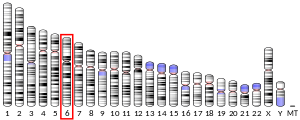
FABP7 maps onto human chromosome 6q22.31, a schizophrenia linkage region corroborated by a meta-analysis.[9]
As of 2008, two studies have been conducted into FABP7 as a possible risk gene for schizophrenia,[10] with one, that tested for only one SNP, showing negative[11] and another, with seven SNPs,[12] a positive result. The effect of the gene in the latter study was stronger in males. This study also linked FABP7 variation to weak prepulse inhibition in mice; deficit in PPI is an endophenotypic trait observed in schizophrenia patients and their relatives.
| This article uses material from the Wikipedia article Metasyntactic variable, which is released under the Creative Commons Attribution-ShareAlike 3.0 Unported License. |