Ceruloplasmin (or caeruloplasmin) is a ferroxidase enzyme that in humans is encoded by the CP gene.[5][6][7]
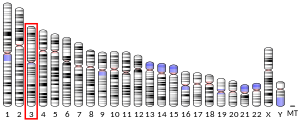


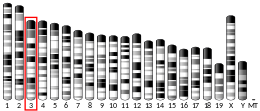

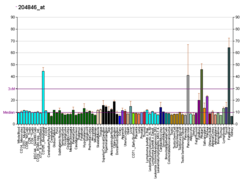
Ceruloplasmin is the major copper-carrying protein in the blood, and in addition plays a role in iron metabolism. It was first described in 1948.[8] Another protein, hephaestin, is noted for its homology to ceruloplasmin, and also participates in iron and probably copper metabolism.
Function
Ceruloplasmin is an enzyme (EC 1.16.3.1) synthesized in the liver containing 6 atoms of copper in its structure.[9] Ceruloplasmin carries more than 95% of the total copper in healthy human plasma.[10] The rest is accounted for by macroglobulins. Ceruloplasmin exhibits a copper-dependent oxidase activity, which is associated with possible oxidation of Fe2+ (ferrous iron) into Fe3+ (ferric iron), therefore assisting in its transport in the plasma in association with transferrin, which can carry iron only in the ferric state.[11] The molecular weight of human ceruloplasmin is reported to be 151kDa.
Regulation
A cis-regulatory element called the GAIT element is involved in the selective translational silencing of the Ceruloplasmin transcript.[12] The silencing requires binding of a cytosolic inhibitor complex called IFN-gamma-activated inhibitor of translation (GAIT) to the GAIT element.[13]
Clinical significance
Like any other plasma protein, levels drop in patients with hepatic disease due to reduced synthesizing capabilities.
Mechanisms of low ceruloplasmin levels:
- Gene expression genetically low (aceruloplasminemia)
- Copper levels are low in general
- Malnutrition/trace metal deficiency in the food source
- Zinc toxicity, due to induced copper deficiency
- Copper does not cross the intestinal barrier due to ATP7A deficiency (Menkes disease and Occipital horn syndrome)
- Delivery of copper into the lumen of the ER-Golgi network is absent in hepatocytes due to absent ATP7B (Wilson's disease)
Copper availability doesn't affect the translation of the nascent protein. However, the apoenzyme without copper is unstable. Apoceruloplasmin is largely degraded intracellularly in the hepatocyte and the small amount that is released has a short circulation half life of 5 hours as compared to the 5.5 days for the holo-ceruloplasmin.
Mutations in the ceruloplasmin gene (CP), which are very rare, can lead to the genetic disease aceruloplasminemia, characterized by hyperferritinemia with iron overload. In the brain, this iron overload may lead to characteristic neurologic signs and symptoms, such as cerebellar ataxia, progressive dementia, and extrapyramidal signs. Excess iron may also deposit in the liver, pancreas, and retina, leading to cirrhosis, endocrine abnormalities, and loss of vision, respectively.
Deficiency
Lower-than-normal ceruloplasmin levels may indicate the following:
- Wilson disease (a rare [UK incidence 2/100,000] copper storage disease).[14]
- Menkes disease (Menkes kinky hair syndrome) (rare – UK incidence 1/100,000)
- Copper deficiency
- Aceruloplasminemia[15]
- Zinc toxicity
Excess
Greater-than-normal ceruloplasmin levels may indicate or be noticed in:
- copper toxicity / zinc deficiency
- pregnancy
- oral contraceptive pill use[16]
- lymphoma
- acute and chronic inflammation (it is an acute-phase reactant)
- rheumatoid arthritis
- Angina[17]
- Alzheimer's disease[18]
- Schizophrenia[19]
- Obsessive-compulsive disorder[20]
Reference ranges
Normal blood concentration of ceruloplasmin in humans is 20–50 mg/dL.

| This article uses material from the Wikipedia article Metasyntactic variable, which is released under the Creative Commons Attribution-ShareAlike 3.0 Unported License. |