NADPH oxidase 4 is an enzyme that in humans is encoded by the NOX4 gene, and is a member of the NOX family of NADPH oxidases.[5]
| NOX4 |
|---|
|
| Identifiers |
|---|
| Aliases | NOX4, KOX, KOX-1, RENOX, NADPH oxidase 4 |
|---|
| External IDs | OMIM: 605261 MGI: 1354184 HomoloGene: 41065 GeneCards: NOX4 |
|---|
| Gene location (Human) |
|---|
 | | Chr. | Chromosome 11 (human)[1] |
|---|
| | Band | 11q14.3 | Start | 89,324,353 bp[1] |
|---|
| End | 89,498,187 bp[1] |
|---|
|
| Gene location (Mouse) |
|---|
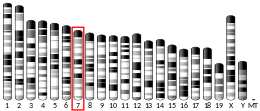 | | Chr. | Chromosome 7 (mouse)[2] |
|---|
| | Band | 7|7 D3 | Start | 87,246,096 bp[2] |
|---|
| End | 87,398,710 bp[2] |
|---|
|
| RNA expression pattern |
|---|
 | | More reference expression data |
|
| Gene ontology |
|---|
| Molecular function | • nucleotide binding
• NAD(P)H oxidase activity
• flavin adenine dinucleotide binding
• oxidoreductase activity, acting on NAD(P)H, oxygen as acceptor
• modified amino acid binding
• GO:0001948 protein binding
• heme binding
• electron transfer activity
• oxidoreductase activity
• oxygen sensor activity
• superoxide-generating NADPH oxidase activity
• protein tyrosine kinase binding
|
|---|
| Cellular component | • integral component of membrane
• membrane
• focal adhesion
• cell membrane
• stress fiber
• cell junction
• NADPH oxidase complex
• nucleolus
• apical plasma membrane
• mitochondrion
• endoplasmic reticulum
• perinuclear region of cytoplasm
• cell periphery
• endoplasmic reticulum membrane
• cell nucleus
• perinuclear endoplasmic reticulum
|
|---|
| Biological process | • cellular response to transforming growth factor beta stimulus
• positive regulation of protein kinase B signaling
• response to hypoxia
• gene expression
• positive regulation of MAP kinase activity
• cardiac muscle cell differentiation
• aging
• bone resorption
• reactive oxygen species metabolic process
• superoxide anion generation
• positive regulation of smooth muscle cell migration
• cell aging
• positive regulation of reactive oxygen species metabolic process
• cellular response to gamma radiation
• cell morphogenesis
• positive regulation of DNA biosynthetic process
• positive regulation of ERK1 and ERK2 cascade
• positive regulation of apoptotic process
• homocysteine metabolic process
• inflammatory response
• oxidation-reduction process
• positive regulation of stress fiber assembly
• cellular response to cAMP
• cellular response to glucose stimulus
• superoxide metabolic process
• negative regulation of cell proliferation
• cellular response to oxidative stress
• electron transport chain
• heart process
• positive regulation of protein tyrosine kinase activity
• reactive oxygen species biosynthetic process
• defense response
|
|---|
| Sources:Amigo / QuickGO |
|
| Orthologs |
|---|
| Species | Human | Mouse |
|---|
| Entrez | | |
|---|
| Ensembl | | |
|---|
| UniProt | | |
|---|
| RefSeq (mRNA) | NM_001143836
NM_001143837
NM_001291926
NM_001291927
NM_001291929
|
|---|
NM_001300995
NM_016931 |
| |
|---|
NM_001285833
NM_001285835
NM_015760 |
|
|---|
| RefSeq (protein) | NP_001137308
NP_001137309
NP_001278855
NP_001278856
NP_001278858
|
|---|
NP_001287924
NP_058627 |
| |
|---|
NP_001272762
NP_001272764
NP_056575 |
|
|---|
| Location (UCSC) | Chr 11: 89.32 – 89.5 Mb | Chr 7: 87.25 – 87.4 Mb |
|---|
| PubMed search | [3] | [4] |
|---|
| Wikidata |
| View/Edit Human | View/Edit Mouse |
|
FunctionEditOxygen sensing is essential for homeostasis in all aerobic organisms. A phagocyte-type oxidase, similar to that responsible for the production of large amounts of reactive oxygen species (ROS) in neutrophil granulocytes, with resultant antimicrobial activity, has been postulated to function in the kidney as an oxygen sensor that regulates the synthesis of erythropoietin in the renal cortex.[5]
Nox4 protects the vasculature against inflammatory stress.[6] Nox-dependent reactive oxygen species modulation by amino endoperoxides can induce apoptosis in high Nox4-expressing cancer cells.[7]



