Lipopolysaccharide binding protein is a protein that in humans is encoded by the LBP gene.[5][6]
| LBP |
|---|
|
| Available structures |
|---|
| PDB | Ortholog search: PDBe RCSB |
|---|
|
|
| Identifiers |
|---|
| Aliases | LBP, BPIFD2, lipopolysaccharide binding protein |
|---|
| External IDs | OMIM: 151990 MGI: 1098776 HomoloGene: 3055 GeneCards: LBP |
|---|
| Gene location (Human) |
|---|
 | | Chr. | Chromosome 20 (human)[1] |
|---|
| | Band | 20q11.23 | Start | 38,346,482 bp[1] |
|---|
| End | 38,377,013 bp[1] |
|---|
|
| Gene location (Mouse) |
|---|
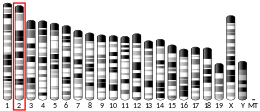 | | Chr. | Chromosome 2 (mouse)[2] |
|---|
| | Band | 2 H1|2 78.72 cM | Start | 158,306,493 bp[2] |
|---|
| End | 158,332,852 bp[2] |
|---|
|
| RNA expression pattern |
|---|
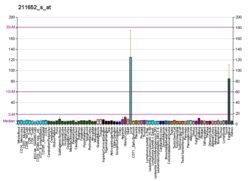
 | | More reference expression data |
|
| Gene ontology |
|---|
| Molecular function | • lipoteichoic acid binding
• GO:0001948 protein binding
• lipid binding
• receptor binding
• lipopolysaccharide binding
• lipopeptide binding
|
|---|
| Cellular component | • membrane
• extracellular exosome
• extracellular region
• cell surface
• extracellular
|
|---|
| Biological process | • detection of molecule of bacterial origin
• lipid transport
• toll-like receptor 4 signaling pathway
• immune system process
• leukocyte chemotaxis involved in inflammatory response
• cellular defense response
• cellular response to lipoteichoic acid
• defense response to bacterium
• lipopolysaccharide transport
• positive regulation of interleukin-8 production
• positive regulation of interleukin-6 production
• positive regulation of neutrophil chemotaxis
• positive regulation of toll-like receptor 4 signaling pathway
• positive regulation of chemokine production
• negative regulation of tumor necrosis factor production
• lipopolysaccharide-mediated signaling pathway
• opsonization
• defense response to Gram-negative bacterium
• positive regulation of tumor necrosis factor production
• response to lipopolysaccharide
• macrophage activation involved in immune response
• positive regulation of respiratory burst involved in inflammatory response
• acute-phase response
• innate immune system
• defense response to Gram-positive bacterium
• cellular response to lipopolysaccharide
• positive regulation of macrophage activation
• toll-like receptor signaling pathway
• macromolecule localization
• positive regulation of cytolysis
• transport
• cytokine-mediated signaling pathway
|
|---|
| Sources:Amigo / QuickGO |
|
| Orthologs |
|---|
| Species | Human | Mouse |
|---|
| Entrez | | |
|---|
| Ensembl | | |
|---|
| UniProt | | |
|---|
| RefSeq (mRNA) | | |
|---|
| RefSeq (protein) | | |
|---|
| Location (UCSC) | Chr 20: 38.35 – 38.38 Mb | Chr 2: 158.31 – 158.33 Mb |
|---|
| PubMed search | [3] | [4] |
|---|
| Wikidata |
| View/Edit Human | View/Edit Mouse |
|
LBP is a soluble acute-phase protein that binds to bacterial lipopolysaccharide (or LPS) to elicit immune responses by presenting the LPS to important cell surface pattern recognition receptors called CD14 and TLR4.[7]
The protein encoded by this gene is involved in the acute-phase immunologic response to gram-negative bacterial infections. Gram-negative bacteria contain a glycolipid, lipopolysaccharide (LPS), on their outer cell wall. Together with bactericidal permeability-increasing protein (BPI), the encoded protein binds LPS and interacts with the CD14 receptor, probably playing a role in regulating LPS-dependent monocyte responses. Studies in mice suggest that the encoded protein is necessary for the rapid acute-phase response to LPS but not for the clearance of LPS from circulation. This protein is part of a family of structurally and functionally related proteins, including BPI, plasma cholesteryl ester transfer protein (CETP), and phospholipid transfer protein (PLTP). Finally, this gene is found on chromosome 20, immediately downstream of the BPI gene.[6]
InteractionsEditLipopolysaccharide-binding protein has been shown to interact with CD14, TLR2, TLR4 and the co-receptor MD-2.[8][9][10]


