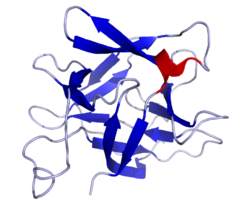
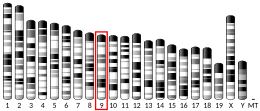
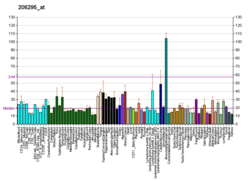
Interleukin-18 (IL18, also known as interferon-gamma inducing factor) is a protein which in humans is encoded by the IL18 gene.[5][6] The protein encoded by this gene is a proinflammatory cytokine. Many cell types, both hematopoietic cells and non-hematopoietic cells, have the potential to produce IL-18. It was first described in 1989 as a factor that induced interferon-γ (IFN-γ) production in mouse spleen cells.[7] Originally, IL-18 production was recognized in Kupffer cells, liver-resident macrophages. However, IL-18 is constitutively expressed in non-hematopoietic cells, such as intestinal epithelial cells, keratinocytes, and endothelial cells.[8] IL-18 can modulate both innate and adaptive immunity and its dysregulation can cause autoimmune or inflammatory diseases.[9][10]





Processing
Cytokines usually contain the signal peptide which is necessary for their extracellular release. In this case, IL18 gene, similar to other IL-1 family members, lacks this signal peptide.[11] Furthermore, similar to IL-1β, IL-18 is produced as a biologically inactive precursor. IL-18 gene encodes for a 193 amino acids precursor, first synthesized as an inactive 24 kDa precursor with no signal peptide, which accumulates in cell cytoplasm. Similarly to IL-1β, the IL-18 precursor is processed intracellularly by caspase 1 in the NLRP3 inflammasome into its mature biologically active molecule of 18 kDa.[12]
Receptor and signaling
IL-18 receptor consists of the inducible component IL-18Rα, which binds the mature IL-18 with low affinity and the constitutively expressed co-receptor IL-18Rβ. IL-18 binds the ligand receptor IL-18Rα, inducing the recruitment of IL-18Rβ to form a high affinity complex, which signals through the toll/interleukin-1 receptor (TIR) domain. This signaling domain recruits MyD88 adaptor protein that activates proinflammatory programes and NF-κB pathway. The activity of IL-18 can be suppressed by extracellular interleukin 18 binding protein (IL-18BP) that binds soluble IL-18 with a higher affinity than IL-18Rα thus prevents IL-18 binding to IL-18 receptor.[13][14] IL-37 is another endogenous factor that suppresses the action of IL-18. IL-37 has high homology with IL-18 and can bind to IL-18Rα, which then forms a complex with IL-18BP, thereby reduces the activity of IL-18.[15] Moreover, IL-37 binds to single immunoglobulin IL-1 receptor related protein (SIGIRR), also known as IL-1R8 or TIR8, which forms a complex with IL-18Rα and induces an anti-inflammatory response. The IL-37/IL-18Rα/IL-1R8 complex activates the STAT3 signaling pathway, decreases NF-κB and AP-1 activation and reduces IFNγ production. Thus, IL-37 and IL-18 have opposing roles and IL-37 can modulate pro-inflammatory effects of IL-18.[16][17]
Function
IL-18 belongs to the IL-1 superfamily and is produced mainly by macrophages but also other cell types, stimulates various cell types and has pleiotropic functions. IL-18 is a proinflammatory cytokine that facilitates type 1 responses. Together with IL-12, it induces cell-mediated immunity following infection with microbial products like lipopolysaccharide (LPS). IL-18 in combination with IL12 acts on CD4, CD8 T cells and NK cells to induce IFNγ production, type II interferon that plays an important role in activating the macrophages or other cells. The combination of this IL-18 and IL-12 has been shown to inhibit IL-4 dependent IgE and IgG1 production and enhance IgG2a production in B cells.[18] Importantly, without IL-12 or IL-15, IL-18 does not induce IFNγ production, but plays an important role in the differentiation of naive T cells into Th2 cells and stimulates mast cells and basophils to produce IL-4, IL-13, and chemical mediators such as histamine.[19]
Clinical significance
Apart from its physiological role, IL-18 is also able to induce severe inflammatory reactions, which suggests its role in certain inflammatory disorders such as the chronic inflammation and the autoimmune disorders.[20]
Endometrial IL-18 receptor mRNA and the ratio of IL-18 binding protein to interleukin 18 are significantly increased in adenomyosis patients in comparison to normal people, indicating a role in its pathogenesis.[21]
IL-18 has been implicated as an inflammatory mediator of Hashimoto's thyroiditis, the most common cause of autoimmune hypothyroidism. IL-18 is up regulated by interferon-gamma.[22]
IL-18 has also been found to increase the Alzheimer's disease-associated amyloid-beta production in human neuron cells.[23]
IL-18 is also associated with urine protein excretion what means that it can be marker for assessing the progression of diabetic nephropathy.[24][25] This interleukin was also significantly elevated in patients with microalbuminuria and macroalbuminuria when it was compared with healthy people and patients with diabetes which have normoalbuminuria.[26]
IL-18 is involved in the neuroinflammatory response after intracerebral hemorrhage.[27]
The single-nucleotide polymorphism (SNP) IL18 rs360719, a genetic variant of the Interleukin-18 (IL-18) gene, revealed a probable role in determining the susceptibility to systemic lupus erythematosus and to be a possible "key factor in the expression of the IL18 gene."[20]
| This article uses material from the Wikipedia article Metasyntactic variable, which is released under the Creative Commons Attribution-ShareAlike 3.0 Unported License. |