CD6 (Cluster of Differentiation 6) is a human protein encoded by the CD6 gene.[5][6]
| CD6 |
|---|
|
| Available structures |
|---|
| PDB | Ortholog search: PDBe RCSB |
|---|
|
|
| Identifiers |
|---|
| Aliases | CD6, TP120, CD6 molecule |
|---|
| External IDs | OMIM: 186720 MGI: 103566 HomoloGene: 4893 GeneCards: CD6 |
|---|
| Gene location (Human) |
|---|
 | | Chr. | Chromosome 11 (human)[1] |
|---|
| | Band | 11q12.2 | Start | 60,971,680 bp[1] |
|---|
| End | 61,020,377 bp[1] |
|---|
|
| Gene location (Mouse) |
|---|
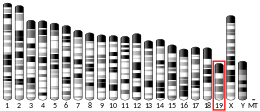 | | Chr. | Chromosome 19 (mouse)[2] |
|---|
| | Band | 19 A|19 7.16 cM | Start | 10,789,341 bp[2] |
|---|
| End | 10,830,058 bp[2] |
|---|
|
| Gene ontology |
|---|
| Molecular function | • lipopolysaccharide binding
• lipoteichoic acid binding
• scavenger receptor activity
• GO:0001948 protein binding
• identical protein binding
|
|---|
| Cellular component | • integral component of membrane
• membrane
• intrinsic component of plasma membrane
• cell membrane
• integral component of plasma membrane
• T cell receptor complex
• extracellular region
• immunological synapse
• external side of plasma membrane
|
|---|
| Biological process | • positive regulation of cytokine production involved in inflammatory response
• heterophilic cell-cell adhesion via plasma membrane cell adhesion molecules
• adaptive immune response
• immune system process
• acute inflammatory response to antigenic stimulus
• receptor-mediated endocytosis
• response to lipopolysaccharide
• cell adhesion
• positive regulation of T cell proliferation
• innate immune system
• immunological synapse formation
• lipopolysaccharide-mediated signaling pathway
• vesicle-mediated transport
• endocytosis
|
|---|
| Sources:Amigo / QuickGO |
|
| Orthologs |
|---|
| Species | Human | Mouse |
|---|
| Entrez | | |
|---|
| Ensembl | | |
|---|
| UniProt | | |
|---|
| RefSeq (mRNA) | |
|---|
NM_001254750
NM_001254751
NM_006725 |
| |
|---|
| RefSeq (protein) | |
|---|
NP_001241679
NP_001241680
NP_006716 |
| |
|---|
| Location (UCSC) | Chr 11: 60.97 – 61.02 Mb | Chr 19: 10.79 – 10.83 Mb |
|---|
| PubMed search | [3] | [4] |
|---|
| Wikidata |
| View/Edit Human | View/Edit Mouse |
|
FunctionEditThis gene encodes a protein found on the outer membrane of T-lymphocytes as well as some other immune cells. The encoded protein contains three scavenger receptor cysteine-rich (SRCR) domains and a binding site for an activated leukocyte cell adhesion molecule. The gene product is important for continuation of T cell activation.[5]
Clinical significanceEditCertain alleles of this gene may be associated with susceptibility to multiple sclerosis.[7][8]



