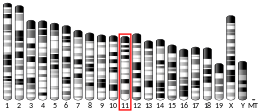
β2-glycoprotein 1, also known as beta-2 glycoprotein 1 and Apolipoprotein H (Apo-H), is a 38 kDa multifunctional plasma protein that in humans is encoded by the APOH gene.[5] One of its functions is to bind cardiolipin. When bound, the structure of cardiolipin and β2-GP1 both undergo large changes in structure.[6] Within the structure of Apo-H is a stretch of positively charged amino acids (protein sequence positions 282-287), Lys-Asn-Lys-Glu-Lys-Lys, are involved in phospholipid binding (see image on right).[7]





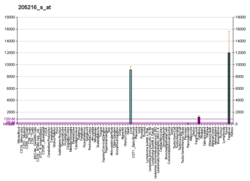
β2-GP1 has a complex involvement in agglutination. It appears to alter adenosine diphosphate (ADP)-mediated agglutination of platelets.[8] Normally, β2-GP1 assumes an anticoagulation activity in serum (by inhibiting coagulation factors); however, changes in blood factors can result in a reversal of that activity.
Although previously referred to as apolipoprotein H, it is not present in appreciable quantities in the lipoprotein fractions, so ApoH is therefore thought to be a misnomer.[9]
Inhibitory activities
β2-GP1 appears to completely inhibit serotonin release by the platelets[10] and prevents subsequent waves of the ADP-induced aggregation. The activity of β2-GP1 appears to involve the binding of agglutinating, negatively charged compounds, and inhibits agglutination by the contact activation of the intrinsic blood coagulation pathway.[11] β2-GP1 causes a reduction of the prothrombinase binding sites on platelets and reduces the activation caused by collagen when thrombin is present at physiological serum concentrations of β2-GP1 suggesting a regulatory role of β2-GP1 in coagulation.[12]
β2-GP1 also inhibits the generation of factor Xa in the presence of platelets.[13] β2-GP1 also inhibits that activation of factor XIIa.[14]
In addition, β2-GP1 inhibits the activation of protein C blocking its activity on phosphatidylserine:phosphatidylcholine vesicles[15] however once protein C is activated, Apo-H fails to inhibit activity. Since protein C is involved in factor Va degradation Apo-H indirectly inhibits the degradation of factor Va.[16] This inhibitory activity is diminished by adding phospholipids suggesting the Apo-H inhibition of protein C is phospholipid competitive.[17] This indicates that under certain conditions Apo-H takes on procoagulation properties.
Pathology
Anti-β2-GP1 antibodies are found in both infectious and some systemic autoimmune diseases (eg. systemic lupus erythematosus (SLE)).[18] Positivity for anti-cardiolipin antibodies in diagnostic tests for autoimmune antiphospholipid syndrome requires the presence of β2-GP1in the cardiolipin extract.[19][20] Anti-β2-GP1 antibodies are strongly associated with thrombotic forms of lupus.
Sushi 2 protein domain
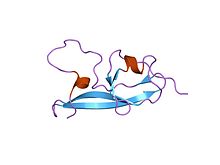
In molecular biology, the protein domain Sushi 2 is also known as the fifth protein domain of beta-2 glycoprotein 1 (β2-GP1). This protein domain is only found in eukaryotes. The first four domains found in Apolipoprotein H resemble each other, however the fifth one appears to be different.[21]
Structure
This protein domain is composed of four well-defined anti-parallel beta-strands and two short alpha-helices, as well as a long highly flexible loop.[22] Additionally, the fifth protein domain appears to resemble the other four in Apolipoprotein with the exception of three internal disulfide bonds and an extra C-terminal loop.[21]
Function
Its exact function remains to be fully elucidated; however it is known to play an important role in the binding of β2-GP1 to negatively charged compounds and subsequent capture for binding of anti-β2-GP1 antibodies.[22] Development of antibodies against β2-GP1 can lead to Antiphospholipid syndrome which often leads to pregnancy complications.[21]
| This article uses material from the Wikipedia article Metasyntactic variable, which is released under the Creative Commons Attribution-ShareAlike 3.0 Unported License. |