Aldo-keto reductase family 1 member C3 (AKR1C3), also known as 17β-hydroxysteroid dehydrogenase type 5 (17β-HSD5, HSD17B5) is a key steroidogenic enzyme that in humans is encoded by the AKR1C3 gene.[5][6][7]
| AKR1C3 |
|---|
 |
| Available structures |
|---|
| PDB | Ortholog search: PDBe RCSB |
|---|
| List of PDB id codes |
|---|
1RY0, 1RY8, 1S1P, 1S1R, 1S2A, 1S2C, 1XF0, 1ZQ5, 2F38, 2FGB, 3R43, 3R58, 3R6I, 3R7M, 3R8G, 3R8H, 3R94, 3UFY, 3UG8, 3UGR, 3UWE, 4DBS, 4DBU, 4DBW, 4DZ5, 4FA3, 4FAL, 4FAM, 4H7C, 4HMN, 4WDT, 4WDU, 4WDW, 4WDX, 4WRH, 4XVD, 4XVE, 4ZFC, 4YVX, 4YVV |
|
|
| Identifiers |
|---|
| Aliases | AKR1C3, DD3, DDX, HA1753, HAKRB, HAKRe, HSD17B5, PGFS, hluPGFS, aldo-keto reductase family 1, member C3, aldo-keto reductase family 1 member C3 |
|---|
| External IDs | OMIM: 603966 MGI: 2145420 HomoloGene: 128661 GeneCards: AKR1C3 |
|---|
| EC number | 1.3.1.20 |
|---|
| Gene location (Human) |
|---|
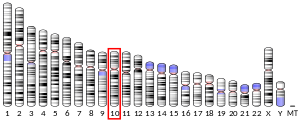 | | Chr. | Chromosome 10 (human)[1] |
|---|
| | Band | 10p15.1 | Start | 5,035,354 bp[1] |
|---|
| End | 5,107,686 bp[1] |
|---|
|
| Gene location (Mouse) |
|---|
 | | Chr. | Chromosome 13 (mouse)[2] |
|---|
| | Band | 13|13 A1 | Start | 4,132,615 bp[2] |
|---|
| End | 4,150,654 bp[2] |
|---|
|
| RNA expression pattern |
|---|
 | | More reference expression data |
|
| Gene ontology |
|---|
| Molecular function | • delta4-3-oxosteroid 5beta-reductase activity
• prostaglandin-F synthase activity
• trans-1,2-dihydrobenzene-1,2-diol dehydrogenase activity
• alditol:NADP+ 1-oxidoreductase activity
• retinal dehydrogenase activity
• geranylgeranyl reductase activity
• indanol dehydrogenase activity
• aldo-keto reductase (NADP) activity
• dihydrotestosterone 17-beta-dehydrogenase activity
• phenanthrene 9,10-monooxygenase activity
• ketoreductase activity
• oxidoreductase activity, acting on NAD(P)H, quinone or similar compound as acceptor
• testosterone dehydrogenase (NAD+) activity
• retinol dehydrogenase activity
• testosterone 17-beta-dehydrogenase (NADP+) activity
• oxidoreductase activity
• androsterone dehydrogenase activity
• 15-hydroxyprostaglandin-D dehydrogenase (NADP+) activity
• ketosteroid monooxygenase activity
• NADP-retinol dehydrogenase activity
• prostaglandin D2 11-ketoreductase activity
• prostaglandin H2 endoperoxidase reductase activity
• alcohol dehydrogenase (NADP+) activity
• steroid dehydrogenase activity
|
|---|
| Cellular component | • cytoplasm
• cytosol
• intracellular
• extracellular exosome
• cell nucleus
|
|---|
| Biological process | • cellular response to calcium ion
• negative regulation of retinoic acid biosynthetic process
• prostaglandin metabolic process
• G-protein coupled receptor signaling pathway
• cellular response to jasmonic acid stimulus
• steroid metabolic process
• positive regulation of protein kinase B signaling
• male gonad development
• positive regulation of cell death
• daunorubicin metabolic process
• doxorubicin metabolic process
• response to nutrient
• regulation of retinoic acid receptor signaling pathway
• progesterone metabolic process
• cellular response to starvation
• regulation of testosterone biosynthetic process
• cellular response to cadmium ion
• cellular response to corticosteroid stimulus
• cyclooxygenase pathway
• keratinocyte differentiation
• retinal metabolic process
• retinoid metabolic process
• cellular response to reactive oxygen species
• farnesol catabolic process
• positive regulation of endothelial cell apoptotic process
• positive regulation of reactive oxygen species metabolic process
• cellular response to prostaglandin D stimulus
• positive regulation of cell proliferation
• oxidation-reduction process
• renal absorption
• testosterone biosynthetic process
• cellular response to prostaglandin stimulus
• retinol metabolic process
• macromolecule metabolic process
|
|---|
| Sources:Amigo / QuickGO |
|
| Orthologs |
|---|
| Species | Human | Mouse |
|---|
| Entrez | | |
|---|
| Ensembl | | |
|---|
| UniProt | | |
|---|
| RefSeq (mRNA) | |
|---|
NM_003739
NM_001253908
NM_001253909 |
| |
|---|
| RefSeq (protein) | |
|---|
NP_001240837
NP_001240838
NP_003730 |
| |
|---|
| Location (UCSC) | Chr 10: 5.04 – 5.11 Mb | Chr 13: 4.13 – 4.15 Mb |
|---|
| PubMed search | [3] | [4] |
|---|
| Wikidata |
| View/Edit Human | View/Edit Mouse |
|
FunctionEditThis gene encodes a member of the aldo/keto reductase superfamily, which consists of more than 40 known enzymes and proteins. These enzymes catalyze the conversion of aldehydes and ketones to their corresponding alcohols by utilizing NADH and/or NADPH as cofactors. The enzymes display overlapping but distinct substrate specificity. This enzyme catalyzes the reduction of prostaglandin D2, prostaglandin H2, and phenanthrenequinone, and the oxidation of prostaglandin F2α to prostaglandin D2.[7] It is also capable of metabolizing estrogen and progesterone.[8]
AKR1C3 may play an important role in the development of allergic diseases such as asthma, and may also have a role in controlling cell growth and/or differentiation. This gene shares high sequence identity with three other gene members and is clustered with those three genes at chromosome 10p15-p14.[7]
PathologyEditAKR1C3 is overexpressed in prostate cancer (PCa) and is associated with the development of castration-resistant prostate cancer (CRPC). In addition, AKR1C3 overexpression may serve as a promising biomarker for prostate cancer progression.[9]



